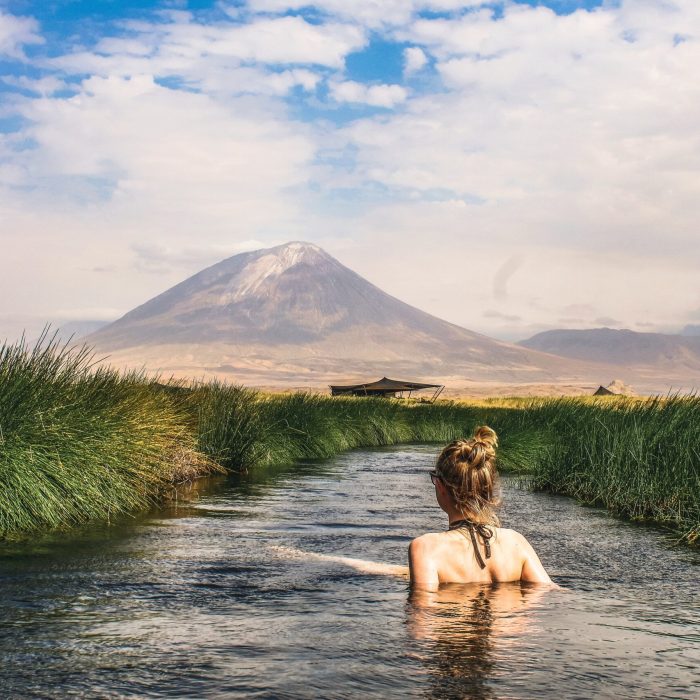
Lake Natron is a salt or soda lake not far from Lake Manyara in northern Tanzania. It is located in the Gregory Rift, the eastern branch of the East African Rift. The lake lays at the foot of the Ol Doinyo Lengai, an active volcano.
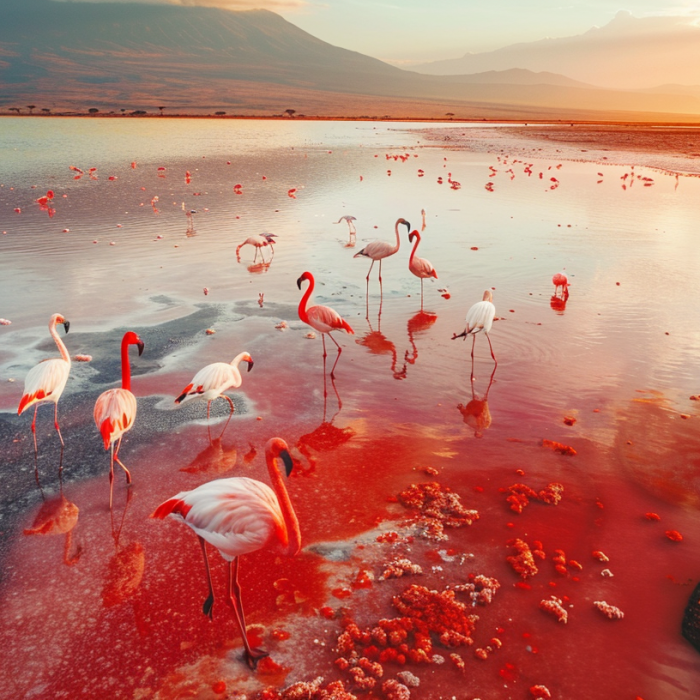
Lake Natron is quite shallow, less than three meters deep, and varies in width depending on its water level. The lake is 57 kilometers long and 22 kilometers wide. The area receives irregular seasonal rainfall, mainly between December and May. The temperatures at the lake are often over 40 °C.As the fresh water evaporates in the lake, water with high concentrations of salt minerals such as sodium and trona remains. The alkalinity of the lake can reach a pH level of more than 12. Special bacteria and blue algae thrive in this environment and form an ideal breeding ground for the life of birds. Such halophilic organisms include some cyano bacteria that, like plants, produce their own food through photosynthesis. The red pigment in those cyano bacteria produces the deep red colors of the lake’s waters and the orange colors in the shallow areas. Salt-loving microorganisms living there are coloring the alkali salt crust on the surface of the lake is red or pink.
Start planning your unforgettable Lake Natron safari
Let Bingo Safaris take you on a journey of a lifetime—wildlife, landscapes, and memories await
Lake Natron receives only 400 mm of rain a year, and much of that is ‘phantom rain’ – rain that evaporates before hitting the surface. This is because the lake is in a desert.
2. A volcano-fed lake
The lake has no outlets and receives most of its water from springs and episodic streams. Because the water coming into the lake leaches through the volcanic material of nearby Mt Ol Doinyo Lengai, the lake’s water is highly alkaline.
3. The lake’s water is poisonous
Lake Natron contains large salt, soda and magnesite deposits. This is a good environment for the growth of a kind of bacteria that damages the innards of the organisms that drink it.
4. Flamingoes thrive where others perish
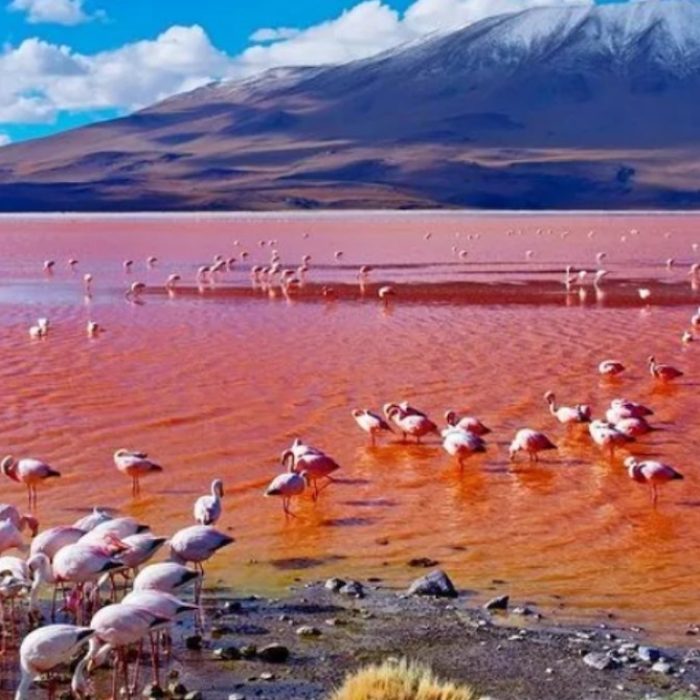
Flamingos aren’t negatively affected by the bacteria in Lake Natron that harm most other birds. The lake is the largest breeding ground in the world for lesser flamingoes!
5. The water sometimes turns red
The water of Lake Natron sometimes turns red (or orange-red) because of the algae that thrive in its hypersaline environment. This red tinge to the water can even be seen from space!
6. The lake is really hot
The lake’s temperature can rise to 60 °C (140 °F) in summer! There are also hot springs on its eastern shore.
Lake Natron is in an arid, hot region. Temperatures can easily soar above 40 °C (104 °F).
July to early October is arguably the best time to visit the region for two reasons:
Winter offers slightly cooler weather and no rain. You’ll enjoy clear, expansive views of the lake, Ol Doinyo Lengai and the Great Rift Valley escarpment.
Since most people heading to Lake Natron also plan to visit the Serengeti, this is again an excellent time, as you can see the Great Wildlife Migration river crossings that take place at this time of year in the northern Serengeti.
During the rainy season (late March to early May), certain roads to and from Lake Natron can become more difficult to navigate. That said, it’s still totally possible to visit at that time – the drive just takes a little longer. The rainy season also brings some beautiful green softness to the region, so for some, that’s a drawcard.
Lake Natron
Map.
Cookies
We serve cookies. If you think that's ok, just click "Accept all". You can also choose what kind of cookies you want by clicking "Settings".